

Last Updated: November 6, 2026
Quick Summary
Uplighting ideas for wedding receptions are worth it because small floor fixtures aimed at the walls change how any room looks and feel. Match the color to the room’s existing palette, and plan roughly one fixture every 6 to 8 feet along each wall you want to wash.
- Warm amber and soft gold are the safest default because they flatter most wood tones, brick and cream drapery.
- Plan roughly one fixture every 6 to 8 feet along a wall, placed 6 to 12 inches off the wall.
- A small room under about 1,500 square feet typically needs four to six fixtures.
- Confirm outlet locations, breaker capacity and insurance requirements with the venue coordinator before choosing a layout.
- If your photographer shoots without flash, favor lighter tones and keep brightness moderate.
Table of Contents
- Simple Uplighting Ideas for Wedding Receptions That Work in Any Room
- Indoor Uplighting Ideas for Wedding Receptions: Walls, Columns and the Head Table
- Outdoor Uplighting Ideas for Wedding Receptions and Amber Uplighting for Warm Evenings
- Booking Uplighting for Your Reception With Rakis Productions
- Frequently Asked Questions
Simple Uplighting Ideas for Wedding Receptions That Work in Any Room
Uplighting is one of the simplest ways to change how a reception room looks and feels. Small fixtures along the floor aimed at the walls turn plain rooms into warm, finished spaces. Choose a color and layout that fit the room you actually booked, not the ballroom in the inspiration photo.
Pick the color from the room, not from a swatch
Start with the venue’s existing palette. Warm amber and soft gold read as neutral and flatter most wood tones, brick, and cream drapery, making them the safest default. Blush and rose gold suit romantic receptions but can turn muddy against red brick or dark wood paneling. Cool white and ice blue make modern, glass-and-steel spaces feel crisp, yet can read as clinical in a historic hall.
A simple color-selection framework
Ask three questions in order. What mood do you want on the dance floor versus the dining area? What colors already appear in linens, florals, and the venue’s fixed finishes? How will the color look in photos?
A common pattern is one base color on the walls and a second accent color only on the dance floor or behind the head table.
Fixture counts and spacing that actually work
Plan roughly one fixture every 6 to 8 feet along a wall you want to wash, placing each light 6 to 12 inches from the wall, angled up and slightly toward the surface. A small room (under about 1,500 square feet) typically needs four to six fixtures; a mid-size ballroom often needs 10 to 16; a large tent or open-air space can run 20 or more. Corners, columns, and doorway reveals each deserve their own fixture because they cast shadows that break up an even wash.
Keep cables tucked away and check that each fixture is safely out of the path of guests and staff. Keep a clear gap from fabric drapes or flowers to avoid scorching, and confirm the fixture’s heat output with your rental provider before placing it near tulle or dried florals.
Coordinate with the venue before you commit
Ask the venue coordinator where outlets are, whether the room’s breakers can handle the added load, and whether they require a licensed vendor or a certificate of insurance. Many venues also restrict taping cables to certain floors or forbid fixtures in egress paths. Getting these answers before you choose a layout saves a redesign on the day.
Indoor Uplighting Ideas for Wedding Receptions: Walls, Columns and the Head Table
Indoor uplighting works best when it highlights the features a venue already has. Tall columns, arched doorways, and long walls all catch light well. Thoughtful placement can make even simple lighting feel intentional, much like budget friendly decor that relies on a few well-chosen details.
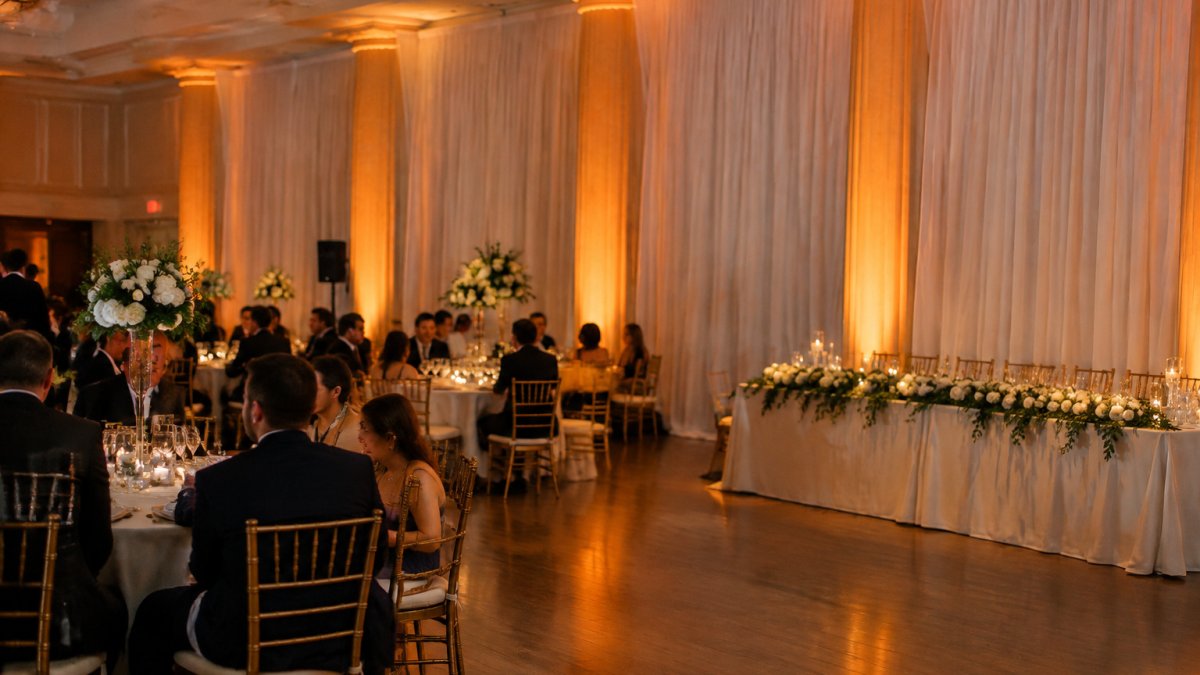
!A softly lit reception hall with amber uplights washing over tall venue columns and white draped walls, guests seated at round tables in the background
A room-by-room placement plan
Treat the reception as four zones and light each one for a different job.
- Perimeter walls: space fixtures every 6 to 8 feet, 6 to 12 inches off the wall, aimed straight up. This is your base wash and the zone that sets the room’s overall color.
- Columns and architectural features: give each column its own fixture placed at the base and aimed up the shaft. Columns read as sculptural when lit from two sides and flat when lit from one, so budget a pair per column if the budget allows.
- Head table: place two fixtures behind the couple’s seats, angled up the back wall or drape, and keep them dimmer than the perimeter. The goal is a soft frame, not a spotlight. Keep the beam above shoulder height to avoid a halo on camera.
Power, cables, and venue rules
Before finalizing a layout, walk the room with the venue coordinator and locate every outlet. Most ballrooms have outlets along the perimeter but few in the center of the floor, which is why dance-floor fixtures often need cable runs taped in covered channels or routed under carpet. For how this lighting is timed and coordinated with the DJ on the night, see how to coordinate wedding lighting and DJ for your reception.
Lighting for photos and video
Uplighting looks different through a camera than it does to your eye. Warm amber and soft pink tend to hold their color on camera, while deep blues and purples can go dark or shift hue under low light. If your photographer or videographer is shooting without flash, favor lighter tones, keep brightness moderate, and ask them to white-balance against the uplights rather than the room’s overhead lights.
DIY versus professional setup
Battery-powered wireless uplights have made DIY setups more practical for some couples, though they come with trade-offs in fixture count, battery life and control range. Professional lighting setups are a different option that can handle larger rooms and timed color changes.
The article breaks the reception into four zones, each with its own lighting job and placement guidance.
| Zone | Placement | Purpose |
|---|---|---|
| Perimeter walls | Every 6 to 8 feet, 6 to 12 inches off wall | Base wash that sets room color |
| Columns | One fixture at base, aimed up (pair if possible) | Sculptural depth |
| Head table | Two fixtures behind couple, dimmer than perimeter | Soft frame, above shoulder height |
| Dance floor | Cooler or contrasting tone at floor level | Separates dance zone from dining |
Outdoor Uplighting Ideas for Wedding Receptions and Amber Uplighting for Warm Evenings
Outdoor receptions need a different plan. Wind, uneven ground and changing light all affect how fixtures perform.
Amber uplighting is especially effective in the evening. As the sky darkens, warm light on trees, tent poles or stone walls creates a glowing, intimate mood.
Pair outdoor uplights with string lights or candles for a layered look. Lighting that changes from dusk into the late evening keeps the atmosphere consistent through the reception.
Booking Uplighting for Your Reception With Rakis Productions
Planning lighting alongside music and a photo booth is easier when one team coordinates the details. Rakis Productions offers a single planning path for DJ and MC entertainment, professional lighting design and Minyma Booth photo booth experiences.
Pricing depends on the number of fixtures, the event date and the delivery and setup requirements of your venue. For current prices or a quote tailored to your reception, contact Rakis Productions through the website’s contact form.
Frequently Asked Questions
Is uplighting worth it for a wedding?
For most receptions, yes, because uplights change a plain room into one that photographs well and feels finished. The main value is in walls, columns and architectural details that the room would otherwise leave dark. Cost depends on the number of fixtures, the rental dates and whether delivery and setup are included. Rakis Productions can provide current pricing and a quote through its contact form, based on your venue and guest count.
How many uplights do you need for a wedding reception?
The count depends on room size and how many surfaces you want to highlight. Small rooms often need only a handful of fixtures placed along the longest walls, while larger halls need more to avoid uneven patches of light. Start by listing the areas you want lit, such as the head table backdrop, columns and the dance floor edge, then match fixture count to those spots. Pricing depends on quantity, dates and delivery, so request a quote for your specific layout.
What color is most flattering for uplighting at a wedding?
Warm amber and soft blush tones are the most common choices because they make skin tones and florals look natural in photos. Cooler colors suit modern or industrial venues, while deeper shades create a dramatic mood for evening events. Test colors against your linens and décor before the day, since venue walls can shift how a shade appears. Ask your planner to run a short test to confirm the look you want.
Your reception should look and feel finished from the first guest arrival to the last song. Reach out to Rakis Productions to talk through your room, your color plan and how the lighting can work with your music.

