
Quick Summary
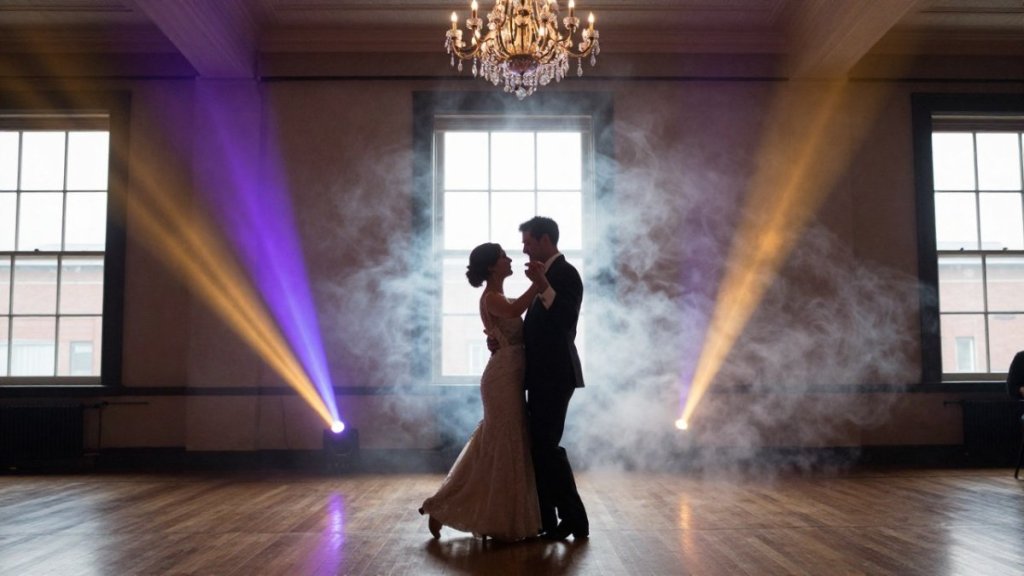
Dance floor lighting is the biggest lever for a reception’s energy. Use moving-head fixtures for club-style floor sweeps, LED uplighting to wash walls and columns in color, and pin spots to highlight the couple during their first dance. Keep the palette to two or three colors and sync the cues with your DJ.
- A reception usually moves through three moods: dinner, toasts, and open dancing.
- Dancing calls for dance floor lighting that pulses with the music.
- Two or three colors that match your decor look intentional.
- Moving-head fixtures sweep beams across the floor for a club-style feel.
- Confirm the venue’s electrical capacity before committing to a design.
Table of Contents
- Choosing Wedding Reception Lighting Ideas That Build Energy
- Event Lighting Equipment for a Wedding Dance Floor
- Wedding Lighting Tips and Effects for Your Dance Floor
- Frequently Asked Questions
Choosing Wedding Reception Lighting Ideas That Build Energy
Dance floor lighting is the single biggest lever for a reception’s energy, and it costs less to get right than most couples expect. The answer to what the room should feel like at 10 p.m. shapes every light placed.
A wedding reception usually moves through three moods: dinner, toasts, and open dancing. Each needs different lighting. Warm, low uplighting works for dinner. Brighter, more directional light suits speeches. Dancing calls for dance floor lighting that pulses with the music and draws guests onto the floor.
Keep the palette tight. Two or three colors that match your decor look intentional. Six competing colors look chaotic on camera.
Event Lighting Equipment for a Wedding Dance Floor
Dance floor setups often combine a few fixture types. Moving-head fixtures can sweep beams across the floor for a club-style feel. LED uplighting can wash walls and columns in color, and pin spots can highlight the couple during their first dance.
Power and placement matter as much as the fixtures. Confirm the venue’s electrical capacity and ask where trusses or stands can go before you commit to a design.
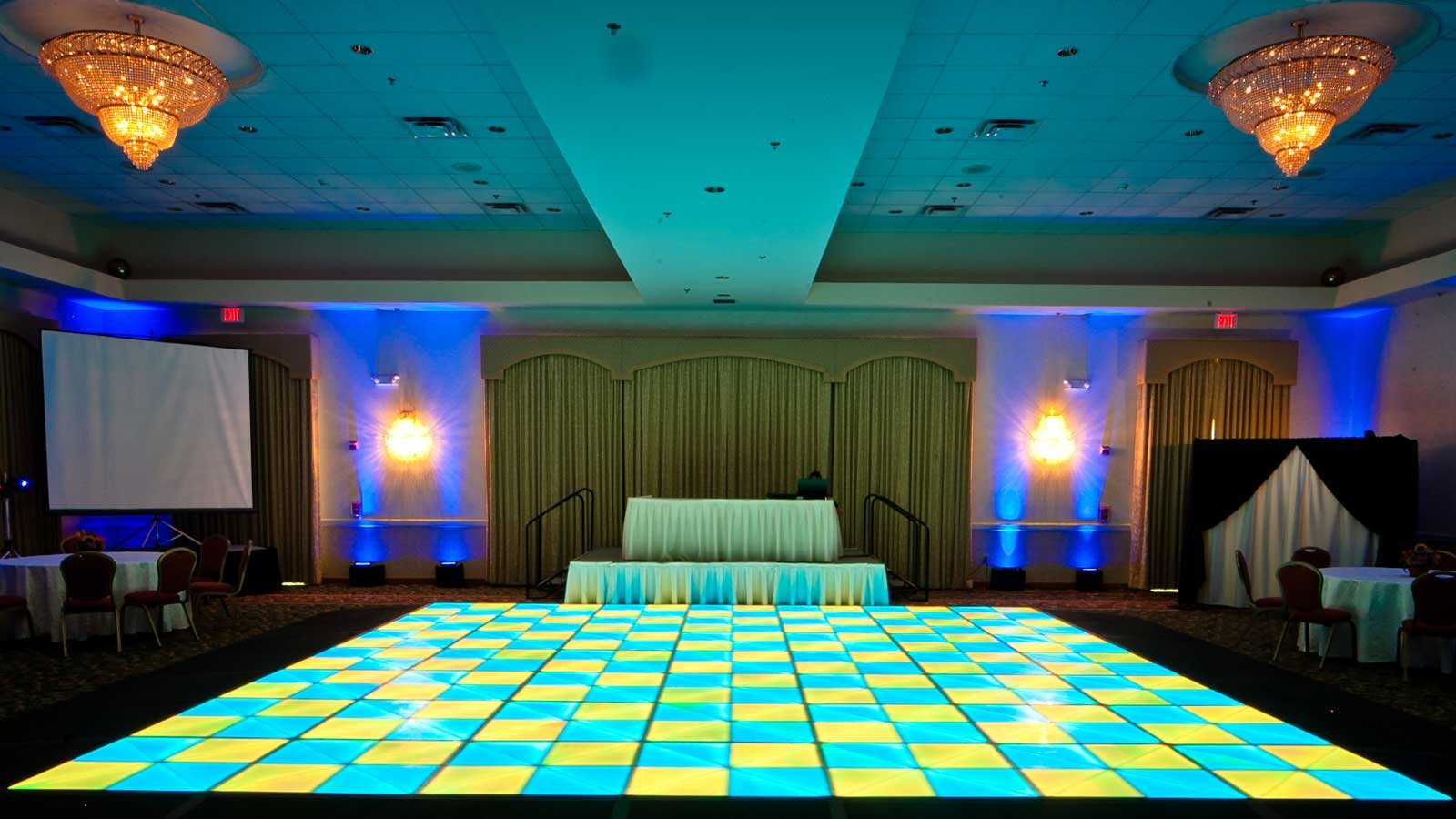
The main fixture types and what each one does on a dance floor:
| Fixture | Best for | Key difference |
|---|---|---|
| Moving-head fixtures | Club-style floor sweeps | Beams move across the floor |
| LED uplighting | Washing walls and columns | Adds color to surfaces |
| Pin spots | Highlighting the couple | Lights a single point, such as the first dance |
Wedding Lighting Tips and Effects for Your Dance Floor
Sync lighting to the music so the floor stays lively without overpowering the room. Test the cues with your DJ before the day.
Ready to build a dance floor that keeps guests moving? Contact Rakis Productions to plan your lighting, DJ, and photo booth as one coordinated setup.
Frequently Asked Questions
What lighting is best for a wedding dance floor?
Moving-head fixtures, LED uplighting and color wash effects are the most common choices for a high-energy wedding dance floor. Moving heads add sweeping beams that follow the music, while LED washes set the color mood without overwhelming the room. Pricing depends on the number of fixtures, the room size, the event date and the delivery requirements, so request a quote from Rakis Productions for current figures.
How do you make a wedding dance floor feel more energetic?
Sync the lighting with the music. Faster tempos work well with pulsing effects and strobes used sparingly, while slower songs suit warm washes and gentle color changes. Pairing dance floor lighting with DJ timing keeps the energy building through the reception. Plan the lighting cues alongside the music timeline so the floor peaks when the crowd is most engaged.
Can dance floor lighting look elegant during dinner and energetic later?
Yes. Start the evening with soft ambient uplighting and muted colors during dinner, then shift to brighter moving-head effects and dynamic color changes for the dancing portion. Coordinating these changes with the reception timeline keeps the room feeling cohesive rather than abrupt.

