

Last Updated: November 8, 2026
Quick Summary
Uplighting for Bar Mitzvah celebrations is floor-mounted light aimed up at walls or drapery, adding color and warmth without using table space. Choose two or three colors, match them to the event theme, and test them in the actual room before the event.
- Position uplights along walls rather than directly in front of seating to avoid glare.
- Use warm amber or white for dinner and photos, and blue or purple for dancing.
- Check wall, carpet and linen colors before committing, since they change how light appears.
- Test each color from several seats and the photo area before guests arrive.
- Keep cords taped down and out of walkways, and never run them under rugs.
Table of Contents
- Why Uplighting Matters for a Bar Mitzvah Celebration
- Bar Mitzvah Lighting Ideas by Room and Moment
- Bar Mitzvah Uplighting Colors and How to Choose Them
- Step-by-Step Uplighting Setup for a Bar Mitzvah Venue
- Bar Mitzvah Candle Lighting Ceremony Lighting
- Bar Mitzvah Dance Floor Lighting and Uplighting Together
- Planning Your Bar Mitzvah Lighting Next Steps
- Frequently Asked Questions
Planning a Bar Mitzvah means juggling a lot of details, and lighting is one that often gets left until the last minute. Uplighting for Bar Mitzvah celebrations can change the whole feel of a room, turning a plain banquet hall into a warm, festive space that photographs well. At Rakis Productions, we coordinate lighting alongside music and photo booth services across New England. This guide walks through the choices that matter most.
Why Uplighting Matters for a Bar Mitzvah Celebration
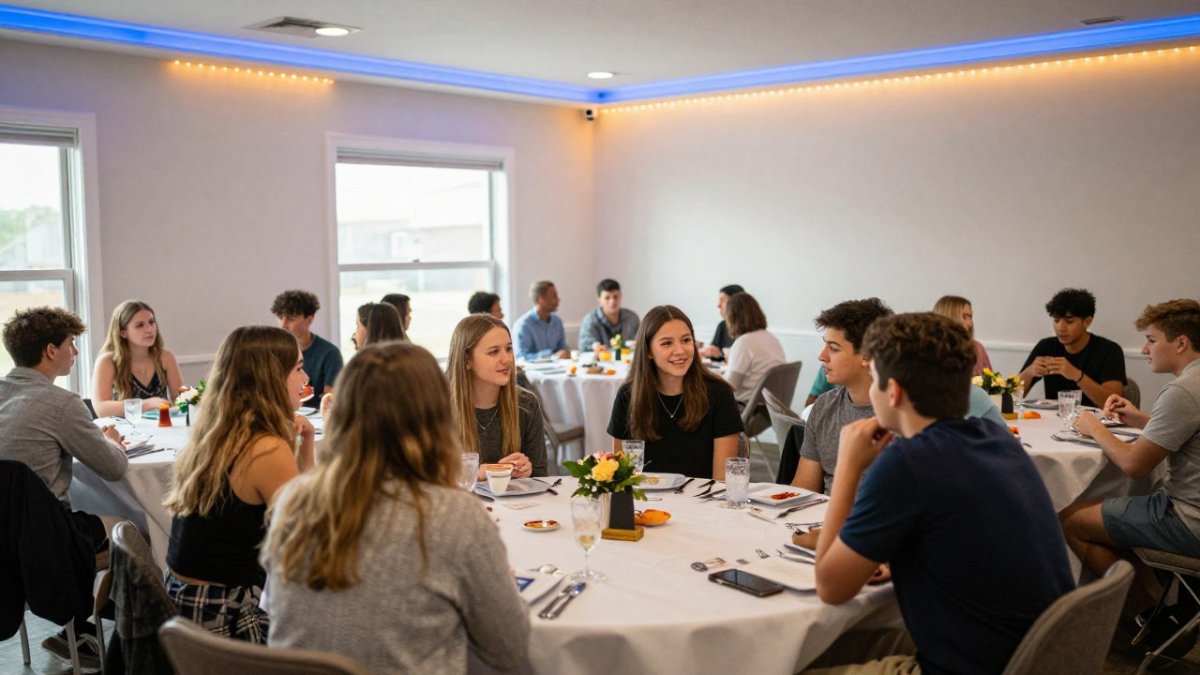
Uplighting is a light placed on the floor that shines up a wall or drapery. It adds color and depth to a room without taking up table space. For a teen celebration with a lot of guests moving between the dance floor, tables, and photo areas, that softer glow helps the whole room feel finished.
A plain white room can feel flat once the sun goes down. Uplights give walls texture and make the space feel more intentional. Guests notice the difference even if they cannot name what changed.
What good uplighting does:
- Warms up bare walls and large empty corners
- Makes the room photograph better in dim conditions
- Ties the lighting to the event colors or theme
- Works with dance floor lighting and room lighting
Watch out: Uplights set too bright or too close to guests can cause glare. Position them along walls, not directly in front of seating.
Bar Mitzvah Lighting Ideas by Room and Moment
Different parts of the celebration need different light. A good plan treats each area on its own terms rather than lighting the whole venue the same way.
- Entrance: Use a soft, steady light so guests feel welcomed as they arrive.
- Dinner tables: Keep the light warm and low so faces stay clear and conversation feels easy.
- Dance floor: Use brighter, moving light to build energy when music starts.
- Photo area: Choose even, flattering light so portraits look natural.
- Candle or speech moments: Dim the room and focus light on the speaker or ceremony area.
Planning these moments ahead lets your lighting shift with the program.
Bar Mitzvah Uplighting Colors and How to Choose Them
Color choice sets the mood more than almost any other decision, but the color you pick on a swatch is not the color guests will see. Uplighting color is filtered through three things: the wall or drape surface, the ambient light already in the room, and the quality of the fixture. Understanding that interaction is what separates a polished palette from a muddy one.
Start with the surface, not the swatch. A warm amber on a white wall reads as soft gold; the same amber on a beige or tan wall can turn orange or brown. Deep blue on a dark navy drape can disappear entirely, while the same blue on white reads crisp and saturated. Before you commit, ask the venue what the walls are made of and what color they are, and whether any walls are fabric-covered, wood-paneled, or mirrored. Mirrored and glass surfaces bounce color back and can double the perceived intensity.
Account for ambient light. Most banquet rooms are not fully dark during dinner. Chandeliers, sconces, window light at early hours, and emergency lighting all wash out uplighting color. A color that looks rich in a dark showroom can look pastel or gray in a lit ballroom. The practical fix is to test the palette in the actual room at the actual event hour, or to ask your lighting provider to bring fixtures to the venue walkthrough so you can see the color on the real walls.
Keep the palette tight. Two or three colors usually look more polished than a rainbow. A common pattern is one warm neutral (amber or warm white) for dinner and photos, one saturated accent (blue, purple, or magenta) for dancing, and a soft transitional tone (pink or rose) for family moments. Warm amber and soft pink feel relaxed and romantic, while blue and purple add a bolder, more modern feel that suits a dance party.
Simple color guide:
- Warm white or amber: Best for dinner and photos; flatters skin tones and reads well on most wall colors.
- Blue or purple: Good for dancing and high energy; most saturated on white or light walls, weakest on dark drapes.
- Pink or rose: Soft and celebratory for family moments; can shift toward red on warm-toned walls.
- Changing colors: Let the lights shift during key program moments, but keep transitions slow enough that guests do not notice a jarring jump.
Match the fixture to the color goal. Not every uplight produces a clean color. If a specific color matters, a school color, a team color, a theme color, ask your lighting provider to demonstrate that exact color on a white surface before you sign off. Seeing the exact shade on a white surface can also clarify how custom lighting installation choices affect the color throughout the room.
Watch out: Choosing a color because it looks great in a photo online, then finding it clashes with the venue carpet or décor. Carpet, table linens, and drapery all reflect color back into the room, and a strong carpet pattern can fight a saturated uplight. Always check the room before you commit, and bring a photo of the carpet and linens to your planning meeting.
Step-by-Step Uplighting Setup for a Bar Mitzvah Venue
A clear setup plan keeps the day running smoothly. Follow these steps:
- Walk the room first. Note wall space, outlets, columns, and where guests will sit.
- Pick your color plan. Choose two or three colors and match them to the event theme.
- Map the fixture positions. Place uplights along the walls that guests see most, spaced evenly.
- Check power and cable routes. Keep cords taped down and out of walkways.
- Test the lights before guests arrive. Run each color and check the brightness from several seats.
- Adjust for the photo area. Make sure the backdrop is evenly lit without harsh shadows.
- Set up program cues. Plan which colors or brightness levels run during toasts, candle lighting, and dancing.
- Do a final walkthrough. Look at the room from the entrance to catch any spots that look off.
Give yourself extra time for this plan. A rushed setup often leads to uneven light and missed cable hazards.
Venue-Specific Considerations and Safety Checks
Every venue is different, so check a few things before the event:
- Electrical capacity: Ask how many circuits are available and whether the venue has load limits.
- Ceiling and wall materials: Some surfaces scorch or stain with heat, so keep fixtures a safe distance from fabric.
- Trip hazards: Tape or cover floor cables, and keep pathways clear for guests and staff.
- Exits and aisles: Make sure lighting never blocks an exit or hides an emergency sign.
- Accessibility: Keep walkways well lit so guests with mobility needs can move safely.
Watch out: Never run extension cords under rugs or through doorways where people walk, since they can overheat or trip someone.
The setup process breaks down into eight steps, each with a clear purpose.
| Step | What to do | Timing |
|---|---|---|
| Walk the room first | Note wall space, outlets, columns and seating | Before planning |
| Pick your color plan | Choose two or three colors matched to the theme | Before planning |
| Map the fixture positions | Place uplights evenly along the most-seen walls | During setup |
| Check power and cable routes | Tape cords down and keep them out of walkways | During setup |
| Test the lights | Run each color and check brightness from several seats | Before guests arrive |
| Adjust for the photo area | Light the backdrop evenly without harsh shadows | Before guests arrive |
| Set up program cues | Plan colors or brightness for toasts, candles and dancing | Before the event |
| Do a final walkthrough | View the room from the entrance to catch problem spots | Just before guests arrive |
Bar Mitzvah Candle Lighting Ceremony Lighting
The candle lighting ceremony is one of the most meaningful moments of the evening, so the lighting should support it without overpowering it. Many families dim the main room and place a soft spotlight or warm uplight on the family and the candles.
Plan the timing with your program. Give the family a clear cue, and bring the light up slowly once the ceremony ends. Some families like to keep the room quiet and dimmed for a few extra moments so guests can reflect.
Test the lighting with the actual candles or the set you plan to use. Make sure the light makes the candles visible from the back of the room without creating glare on the speaker or the family.
Bar Mitzvah Dance Floor Lighting and Uplighting Together
Once the celebration moves to the dance floor, lighting shifts from calm to energetic. Dance floor lighting and uplighting work best when they share a color palette, so the room feels like one design rather than two separate setups.
Moving head lights add motion and a club-style feel, which many teens enjoy. Keep the intensity balanced so the dance floor feels exciting without making the tables uncomfortable to sit at. Coordinate your light changes with the music so the lights hit the big moments, like a song drop or the hora.
Rakis Productions coordinates room lighting and dance floor effects with the music as part of its integrated service. If you want to see how this looks in practice, you can check our moving head dance floor lighting options for events.
Planning Your Bar Mitzvah Lighting Next Steps
Start by listing the moments you want to highlight: arrival, dinner, candle lighting, speeches, and dancing. Then choose a color plan that works across all of them. Walk your venue, confirm the power and placement details, and share the plan with your DJ and any other vendors.
Keep the design simple at first, then add detail where it matters most. A focused plan usually looks better than a crowded one. Rakis Productions offers lighting, DJ, and photo booth services as a single coordinated planning path. Reach out through our contact form to talk through your venue and timeline, and we will help you plan a celebration that feels coordinated from the first guest to the last song.
Frequently Asked Questions
Where should uplights be placed in a bar mitzvah venue?
Place uplights along walls, behind head tables, around the dance floor perimeter and on columns or the stage backdrop. Keep fixtures clear of guest walkways and cables. For a room with 75 guests, a handful of fixtures often covers the main walls, while larger rooms need more. Ask your lighting provider to walk the space before the event, since ceiling height, wall color and outlet locations change the result. Pricing depends on fixture count, event date, and delivery, so request a quote from Rakis Productions for current rates.
Can uplighting change colors during a bar mitzvah celebration?
Yes. Most modern LED uplights are color-changing and can be programmed to shift during dinner, the candle-lighting ceremony and dancing. Soft, single-color washes suit the meal and ceremony, while slower color cycles or brighter saturated hues work well once the dance floor opens. Coordinate cues with your DJ so color changes land on key moments rather than mid-speech. Confirm the lighting provider can run programmed sequences and manual control on the day.
How does uplighting differ from dance-floor lighting?
Uplighting sits on the floor and points upward to color walls, columns and ceilings, creating ambience across the whole room. Dance-floor lighting, such as moving heads or pinspots, aims down or across the floor to create motion and energy where guests dance. Many bar mitzvah setups use both: uplights for the room’s overall look and dance-floor fixtures for high-energy moments. Rakis Productions can discuss how the two work together for your space.

