

Quick Summary
You can scale lighting for small events by sizing your setup to the room and guest count before buying anything. Build it in zones such as walls, dance floor, and stage, and add fixtures to each zone only when it looks dim or flat.
- Measure the room and guest count first to decide how many fixtures you need.
- Start with 2-4 wall uplights for ambiance and color in a small venue.
- Add 1-2 LED PARs on the dance floor if guests spread out.
- Use one compact spotlight for the stage or head table when speeches need emphasis.
- Avoid too many fixtures in a small room, since it can wash out the space and cause glare.
Table of Contents
- Step 1: Size Your Lighting to the Room and Guest Count
- Step 2: Build a Small Venue Lighting Setup in Zones
- Step 3: Design a Small Stage Lighting Layout
- Frequently Asked Questions
Step 1: Size Your Lighting to the Room and Guest Count
Last Updated: November 8, 2026
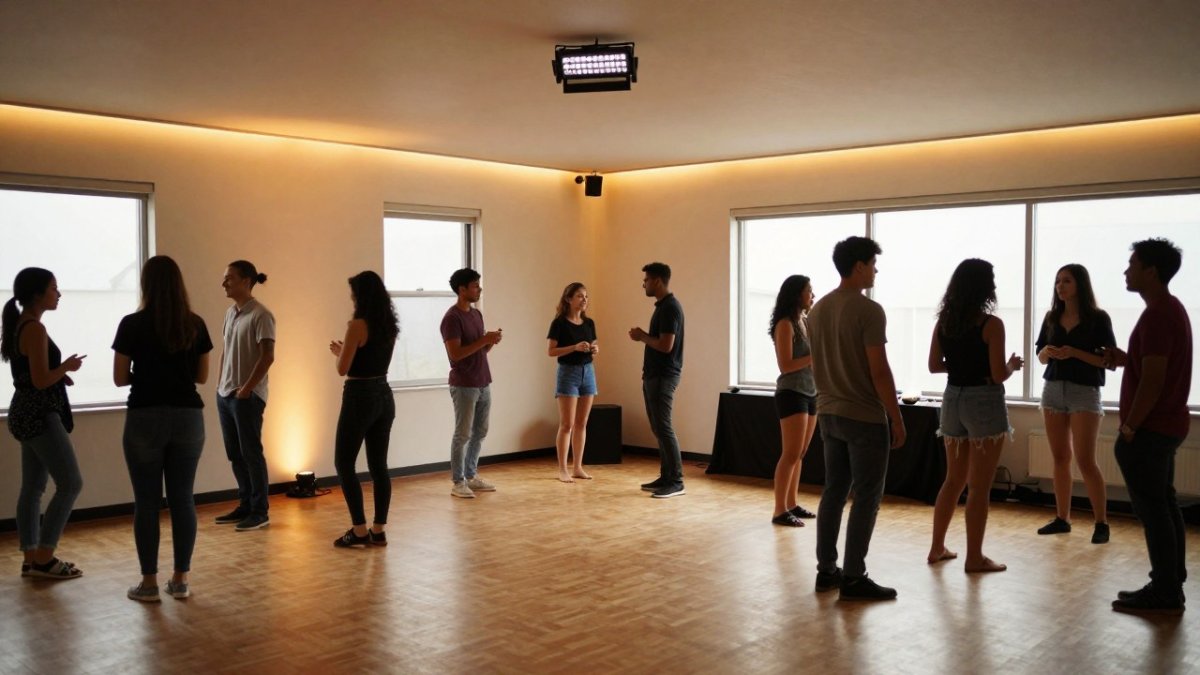
You can scale lighting for small events, and the first step is simple: measure the room before you buy anything. Start with the room and guest count to decide how many fixtures you need. A small Bar Mitzvah in a tight space needs far less rig than a large hall. Once the room and guest count set the scale, consider how ambient light can keep an outdoor networking space welcoming without overwhelming the Event Photojournalism.
Watch out: Too many fixtures in a small room can wash out the space and cause glare. Start small and add units only if the room looks flat.
Step 2: Build a Small Venue Lighting Setup in Zones
To scale lighting cleanly, build it in zones, not as one big block. Each zone, wall uplighting, dance floor wash, or stage light, has its own job and can grow on its own, keeping scaling easy. If you are wondering whether uplighting ideas for wedding receptions are worth it, this section explains where uplights fit.
| Zone | Purpose | Typical Starting Point | Add More When |
|---|---|---|---|
| Walls | Ambiance and color | 2-4 uplights | Room feels dim |
| Dance floor | Energy and visibility | 1-2 LED PARs | Guests spread out |
| Stage or head table | Focus | 1 compact spotlight | Speakers or toasts need emphasis |
Start with the zones that matter most, then expand, keeping a record so your setup stays consistent. For guidance on coordinating wedding lighting with your DJ, read our planning article.
Step 3: Design a Small Stage Lighting Layout
A small stage needs a layout balancing front light, back light, and effects. Place fixtures to light performers from the front and separate them from the background, and keep cables and power in mind before finalizing. If you would rather hire help, the Boston wedding DJ, photo booth and lighting service offers DJ and lighting together.
Think about your audience too. Position lights so they do not shine directly into guests’ eyes or onto cameras during toasts and speeches. A good layout is one you can set up, test, and take down without rushing. To see how wedding DJ and lighting packages are priced, review the bundled options before you finalize your stage plan.
Frequently Asked Questions
Can you scale lighting for small events?
Yes. Start with the room and guest count, then add fixtures in zones: uplighting for walls, a few front-light fixtures for the stage or head table, and one or two effect lights for the dance floor. Each addition is a separate decision, so a 75-guest room may need only a handful of fixtures while a larger room needs more. Pricing depends on quantity, dates and delivery, so request a quote from Rakis Productions for current rates.
How many lights do you need for a small event?
For a small room of roughly 75 guests, a practical starting point is four to six fixtures: two or three for uplighting, two for front light on the stage or head table, and one for the dance floor. Tight rooms need less output than large ones, so avoid over-lighting. Adjust by counting walls to cover, stage depth and whether the space needs color washes or only warm white.
Can a small event lighting setup grow later?
Yes, if you choose fixtures that share the same control protocol and power requirements. Begin with a basic zone of uplighting and front light, then add effect fixtures when the venue or guest count justifies it. Confirm power circuits and cable runs before expanding so the added fixtures do not overload a single circuit.

