
Last Updated: November 21, 2026
Quick Summary
An all-in-one event vendor provides music, lighting and photo booth services through one team, giving you a single point of contact and coordinated timelines. This prevents the drift that happens when separate vendors work independently, so the room stays in sync. Costs depend on date, hours, guest count and equipment, so request an itemized proposal.
- A single point of contact means you make one call instead of relaying timeline changes between three vendors.
- Confirm in writing who makes the final call on timing if a bundled vendor subcontracts any work.
- Ask for an itemized proposal, since a cheaper headline package can cost more after overtime, travel and add-ons.
- Bundles suit coordination-heavy events, while separate contracts preserve control when one service is the centerpiece.
- Confirm the contract names service scope, setup windows, cancellation terms, payment schedule and subcontractor disclosure.
Table of Contents
- Why Couples and Hosts Consider an All-in-One Event Vendor
- Core Benefits: One Point of Contact and Coordinated Setup
- Comparing Event Vendor Packages With Hiring Separately
- Planning Your Booking: Costs, Contracts and Questions to Ask Before Signing
- Frequently Asked Questions
Why Couples and Hosts Consider an All-in-One Event Vendor
Hiring one team for music, lighting and photo booths sounds simpler than managing three contracts, with fewer phone calls and surprises on the day. Rakis Productions, led by Nikos Rakis, offers a single planning path for DJ/MC entertainment, lighting design and photo booth experiences across New England, the model this article examines.
Couples planning weddings, families hosting Bar and Bat Mitzvahs, and corporate planners share one concern: a room that looks disjointed. When a DJ, lighting crew and booth company work separately, music, timeline and visuals drift out of sync. An all-in-one vendor is built to prevent that drift.
Core Benefits: One Point of Contact and Coordinated Setup
The clearest advantage is a single point of contact. Instead of relaying timeline changes between three vendors, you make one call.
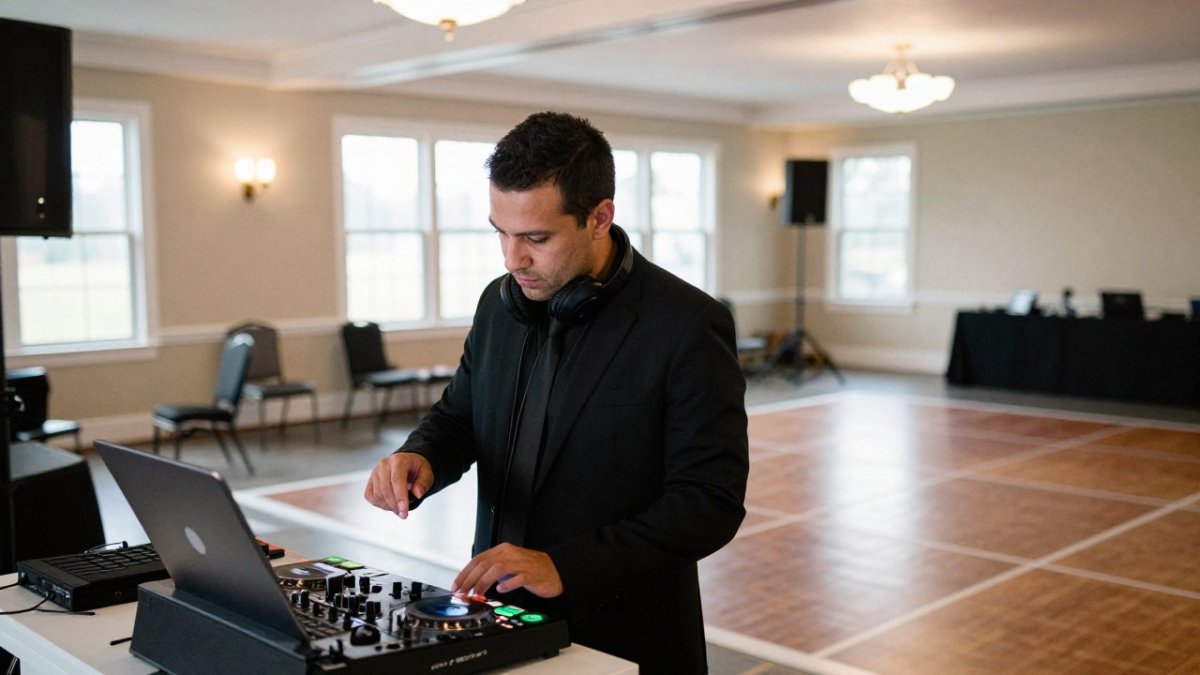
Coordination matters most during the event, when lighting and music changes need to stay in step with the timeline.
Watch out: confirm in writing who makes the final call on timing if a bundled vendor also subcontracts any piece of the work.
Comparing Event Vendor Packages With Hiring Separately
Bundled packages can trade flexibility for convenience. Hiring separately gives full control over each line item, but you manage each contract, deposit and setup window yourself.
Use this quick comparison when weighing the two routes:
| Factor | All-in-one vendor | Separate vendors |
|---|---|---|
| Contacts to manage | One | Three or more |
| Timeline coordination | Built in | Your responsibility |
| Cost transparency | Depends on the package | Easier to itemize |
| Flexibility per service | Often limited | Full control |
Best for: hosts who want one team accountable for the whole room. Skip if: you already have a trusted DJ and only need one specialized service.
Where the money actually goes
A bundled quote and a stack of separate quotes rarely compare cleanly because they bundle different things. The gap usually sits in four line items:
A realistic way to model the comparison
Build a like-for-like worksheet instead of asking which route is cheaper in the abstract. For each service, list hours, staff count, equipment quantity, travel, setup and teardown, and expected add-ons, then price the same scope as a bundle and as separate contracts. The bundle typically wins on coordination-heavy events with shared setup and loses when one service needs far more hours or equipment than the others.
Watch out: a package that looks cheaper at the headline can cost more once overtime, travel and add-ons are applied, so ask for an itemized proposal before comparing totals.
Package structures you will encounter
Bundled offerings tend to fall into three shapes:
- Flat all-inclusive. One price covers a set scope. Easiest to budget, hardest to customize.
- Tiered packages. Good/better/best tiers with defined inclusions. Compare tiers by what is added at each step, not the headline price.
- Build-your-own bundle with a discount. You select services and receive a reduction for combining them. Most flexible, but the discount often applies only to base services, not add-ons.
The flexibility trade-off in practice
Hiring separately gives you full control over each line item, but you then manage each contract, deposit and setup window yourself. That control matters most when one service is the centerpiece, a live band you have already booked, or a lighting design tied to a specific venue rig, and least when the services are interdependent and share a single timeline. If changing one service would force you to re-coordinate the others, a bundle removes work; if each service stands alone, separate contracts preserve leverage.
Planning Your Booking: Costs, Contracts and Questions to Ask Before Signing
Pricing depends on event date, hours, guest count and equipment, so there is no single figure to quote. Check current pricing on the Rakis Productions website or request a quote directly.
What the contract should name explicitly
A bundled booking concentrates risk and accountability in one document, so the scope of each service must be named rather than implied. Before signing, confirm the contract states:
- Service scope per line. Hours, staff count, equipment quantities and exclusions for each service (DJ/MC, lighting, photo booth).
- Setup and teardown windows. Arrival time, load-in access, lighting focus time, and teardown completion relative to venue curfew.
- Cancellation and postponement terms. Notice period, refund schedule, and whether deposits transfer to a new date.
- Payment schedule. Deposit amount, interim payments and final balance due date.
- Subcontractor disclosure. Whether any part of the package may be performed by a third party, and who remains accountable if it is.
Questions to ask before you sign
Ask these directly and get answers in writing:
- Who is my single point of contact on the event day, and what is their cell number?
- How many crew members will be on site, and are they cross-trained across the bundled services?
- What is the backup plan if equipment fails mid-event, is a spare on site or on call?
- Can I see examples of how lighting and music are run together at a comparable event?
- If one service in the bundle underperforms, what remedy does the contract provide?
- Are there overtime rates, and at what point do they apply?
Evaluating service quality inside a bundle
The central risk of an all-in-one vendor is that one provider may be strong in one service and merely adequate in another. Assess each service on its own terms:
- Portfolio depth per service. Ask for examples of each service independently, not only events where all three were used.
- Equipment inventory. Confirm the provider owns or has guaranteed access to the lighting fixtures, sound system and booth equipment quoted, rather than renting per event.
- References by service. Request references from clients who booked the specific service you are most concerned about.
Contingency planning for a bundled booking
Because one provider is accountable for the whole room, the contingency plan should cover the bundle as a unit, not each service in isolation. Confirm who makes the final call on timing if a bundled vendor subcontracts any piece of the work, and ask what happens to the remaining services if one fails. A written run of show, a named day-of contact, and a stated backup for equipment and staffing are the minimum.
If you are ready to move forward, book a wedding DJ and photo booth lighting consultation or check availability for your event date. Rakis Productions can talk through your room, timeline and guest count, and a full breakdown of Boston wedding DJ, photo booth and lighting options is also available.
Start planning your event with Rakis Productions and get one coordinated team for music, lighting and photo booth experiences.
Frequently Asked Questions
Is it cheaper to bundle event services or hire separate vendors?
It depends on the event, the services you need and how each vendor prices its work. Separate vendors can cost less if you only need one service or already have a trusted provider. The fairest way to decide is to request an itemized quote from each option covering the same services, dates, hours and delivery. Pricing varies with guest count, date and scope, so contact Rakis Productions directly for a current quote.
What should I ask before booking an all-in-one event vendor?
Ask who your single point of contact is and how they communicate on the day of the event. Confirm which services are performed by the company itself and which are subcontracted. Request a written timeline showing how music, lighting and photo booth setup will be coordinated. Ask what the backup plan is if equipment fails or a team member cannot attend, and review the contract for cancellation, deposit and liability terms. Requesting references or past event photos also helps you judge the quality of the coordination.
Are there disadvantages to hiring an all-in-one event vendor?
Bundling is not always the right choice. If you already have a DJ you trust, forcing an all-or-nothing package can add cost or limit your options. A single vendor may also be less specialized in one service than a dedicated provider. Because one company handles several roles, a problem in one area can affect the others, so the contract and backup arrangements matter. Weigh convenience against flexibility before deciding.

